
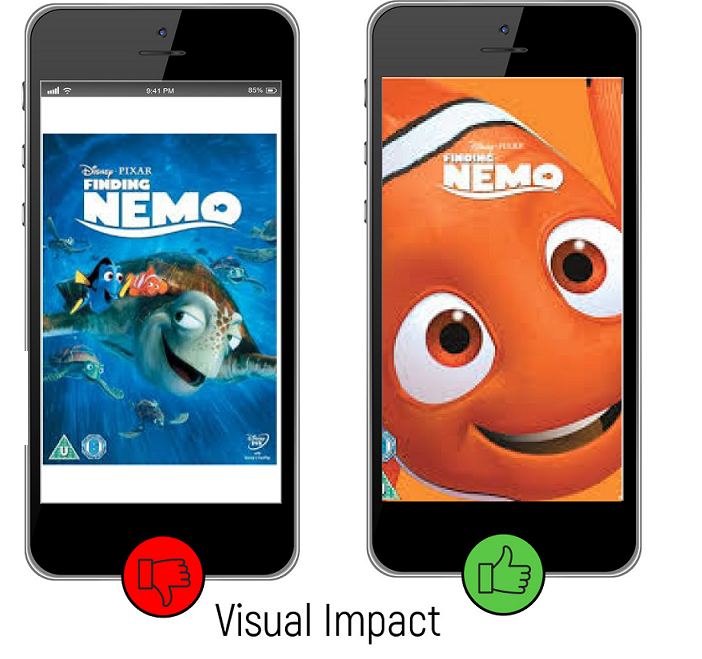
MMS marketing sends rich media — images, GIFs, video — directly to a customer's native message inbox, no app required. In Australia it has become the highest-engagement broadcast channel available to marketers: MMS campaigns routinely see open rates near 98%, and personalised campaigns run through MobileDigital's platform have recorded 60% click-through and coupon redemption rates of 14.5% — against under 1% for comparable email. This guide covers how the channel actually works — file sizes, formats, carrier behaviour, cost logic, design, compliance — so you can evaluate and run it properly.
Last reviewed: 5 August 2026.
MMS has existed since the early 2000s, but in its first decade it was overpriced and patchy — by the time smartphones normalised rich media, WhatsApp and Facebook had claimed person-to-person picture messaging, and marketers wrote MMS off. Two things changed: per-message costs fell sharply, and platform capability (personalised image generation, dynamic content, delivery tracking) caught up. In the US — the leading indicator for the channel — MMS usage grew 28% in 2020 and messaging platform Attentive has reported clients earning $71 for every text-marketing dollar spent. The economics that made MMS a luxury now make it the premium tier of the one channel with near-universal reach: the native inbox.
What you're actually sending, and the limits that matter in Australia:
| Property | SMS | MMS |
|---|---|---|
| Media | text only | image, GIF, video, audio + text |
| Text length | 160 chars (GSM-7) / 70 (unicode); longer messages billed per segment | ~1,000+ chars in one message, plus a subject line |
| Practical media size | — | design to ≤500–600 KB; time-sensitive sends ≤150 KB; AU carriers accept up to ~1 MB |
| Formats that render reliably | — | GIF (animation), PNG, JPEG |
| Sender | number or registered sender ID | dedicated number (recommended) |
| Delivery | near-instant | slightly slower (media download) |
Operational notes behind that table:
First-party results from campaigns run on MobileDigital's platform, plus the industry figures we consider load-bearing:
| Metric | Figure | Context |
|---|---|---|
| Open rate | ~98% | text messaging generally; 90% read within 3 minutes |
| Click-through | up to 60% | personalised MMS campaigns (Add To Cart podcast) |
| Coupon redemption | 14.5% | MMS campaign vs <1% for the equivalent email |
| Sales redemption | 19.94% | Harris Farm animated MMS campaign converting registrants to purchasers |
| Texted coupon urgency | 25% in 3 days, 60% in 7 | CodeBroker US survey |
| Channel preference | 93% | consumers preferring text conversation with a business over call or email |
The honest caveat: these are campaign-level figures, not universal guarantees — personalisation and audience quality drive the top end. The floor (open rate, read speed) is structural to the inbox; the ceiling (CTR, redemption) is earned.
The full comparison has its own page; the short version:
Condensed from our design guide and Think Visual:
Everything in the Australian messaging compliance guide applies to MMS in full: consent, identification, functional opt-out, and the Sender ID Register regime. The two MMS-specific rules: identify your brand in both the media and the text layer, and respect that MMS reads as higher-touch — the same frequency that's tolerable in SMS erodes inferred consent faster in MMS.
What file size should an MMS be in Australia? Design to 500–600 KB or less; for time-sensitive campaigns keep media under 150 KB. Australian carriers accept larger messages (up to around 1 MB), but smaller media delivers faster and more reliably.
What image formats work for MMS marketing? GIF, PNG and JPEG render reliably across Australian handsets. Animated GIF is the most-used format for marketing because it autoplays in the native inbox.
Is MMS more expensive than SMS? Per message, yes — but MMS is billed per message while long SMS bills per 153-character segment, and MMS carries media plus ~1,000 characters. On a per-campaign-outcome basis, personalised MMS redemption rates (14.5% vs <1% for email in our campaign data) frequently make it the cheaper acquisition channel.
Do recipients need an app to receive MMS? No. MMS arrives in the native messages inbox on every phone — that's the channel's core advantage over app-based rich messaging.
Can MMS be personalised at scale? Yes — including the image itself, not just the text. MobileDigital's platform generates per-recipient creative (names, offers, barcodes inside the visual) for campaigns at full list scale.
intouch by MobileDigital is an Australian MMS-first marketing platform: personalised visual campaigns, dedicated numbers, consent and opt-out management built in.